Tennis Elbow in Padel and Racket Sports: Why Vibration Matters and How to Protect Your Arm
Padel is one of the fastest-growing racket sports in the world. But as more players take to the court, an increasingly familiar problem is emerging: elbow pain.
Whether you’re playing padel, tennis, pickleball or squash, repeated impact and stress on the arm can lead to discomfort, inflammation-like symptoms and tendon injuries that affect your ability to play.
One of the most common conditions is tennis elbow, and despite its name, it certainly isn’t limited to tennis players.
For padel enthusiasts in particular, the combination of a relatively rigid racket, repeated ball impacts and an unforgiving hitting surface makes understanding arm protection especially important.
What Is Tennis Elbow?
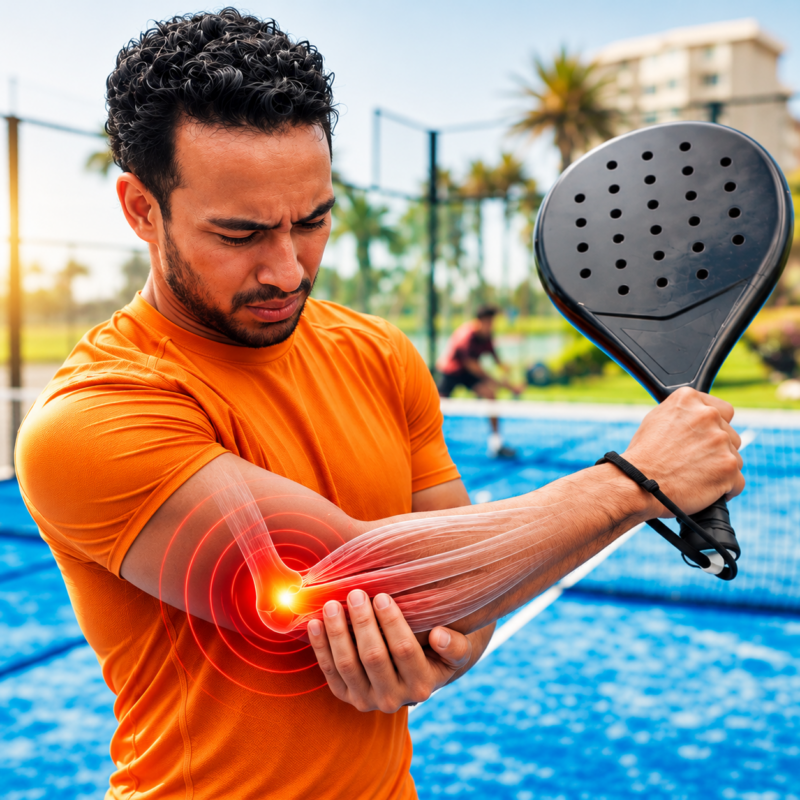
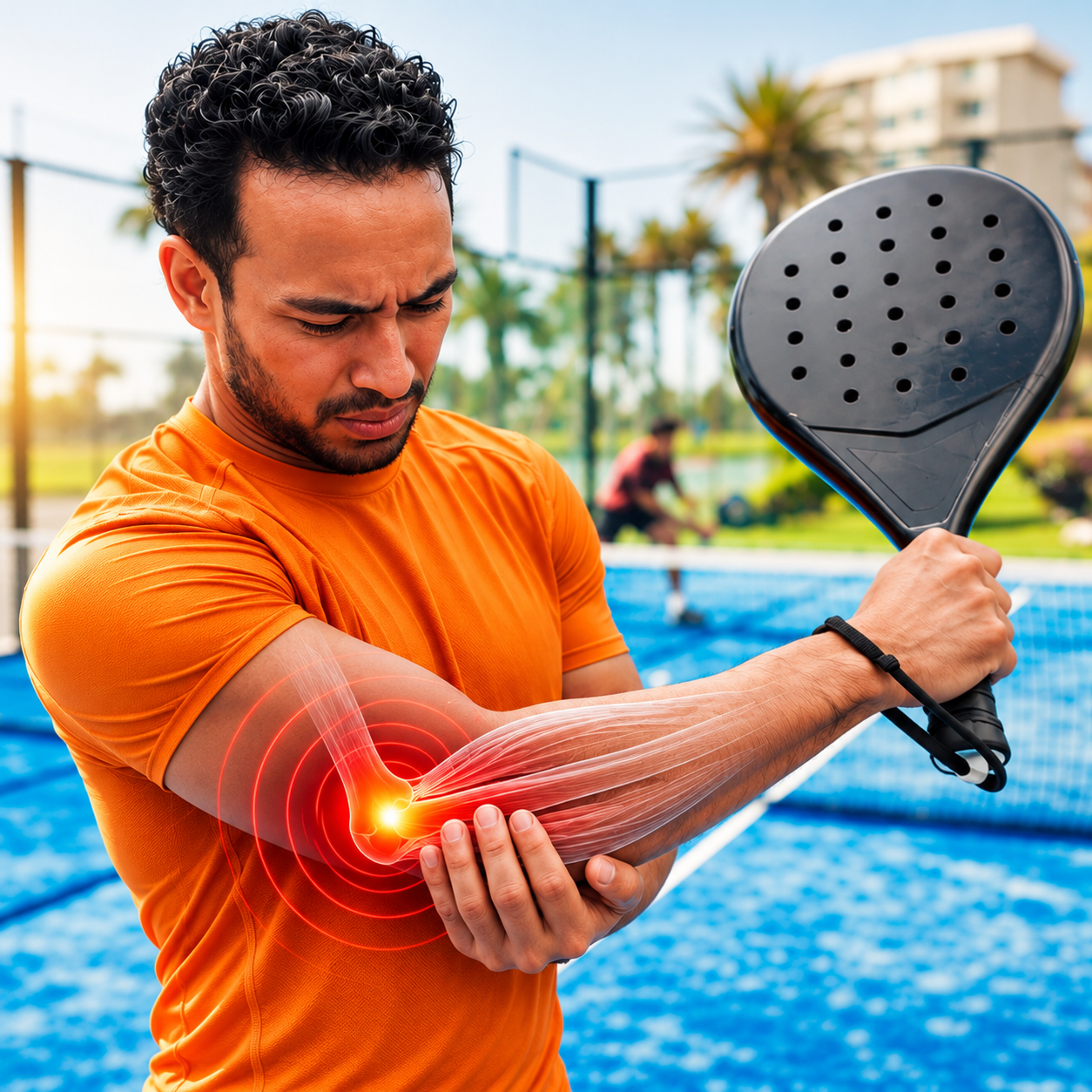
Tennis elbow, medically known as lateral epicondylitis or lateral elbow tendinopathy, affects the tendons on the outside of the elbow.
These tendons connect the forearm muscles responsible for extending and stabilising the wrist to the outer part of the elbow.
Repeated gripping, wrist movements and loading of these muscles can gradually overload the tendon, leading to pain and reduced function.
Common symptoms include:
- Pain or tenderness on the outside of the elbow.
- Discomfort when gripping a racket or shaking hands.
- Pain during backhand shots or off-centre impacts.
- Reduced grip strength.
- Persistent aching after playing or during everyday activities.
Although often described as an inflammatory condition, persistent tennis elbow usually involves changes in the tendon associated with repeated loading rather than inflammation alone.
Why Padel Players May Be Particularly Vulnerable
<text><escape>Unlike traditional tennis rackets, which use a string bed to absorb and redistribute some of the impact energy, padel rackets have a solid hitting surface, generally constructed from carbon fibre or fibreglass over a foam core.</escape></text>
This construction creates a very different playing experience.
Although the internal foam provides some cushioning, the racket can still feel relatively rigid, particularly during powerful shots or when the ball strikes away from the sweet spot.
The result can be a noticeable shock transmitted through the racket, into the hand, wrist and forearm.
Several factors can contribute to elbow problems in padel:
1. Repeated impact and vibration
Every time the ball contacts the racket, impact forces and vibrations are generated.
The amount transmitted to the player’s arm depends on the racket construction, grip, impact location and playing technique.
While vibration itself has not been established as a direct cause of tennis elbow, repeated impact loading may contribute to discomfort and the overall demands placed on the forearm.
2. A less forgiving hitting surface
Padel rackets have no string bed to provide the same type of elastic response found in tennis rackets.
Off-centre shots can produce twisting forces that require the hand and forearm muscles to work harder to stabilise the racket.
3. Repetitive gripping
Padel involves frequent volleys, defensive shots, overhead smashes and rapid changes of direction.
Players repeatedly tighten their grip to control the racket, particularly when defending against powerful shots.
Excessive gripping can increase the workload on the forearm muscles and tendons.
4. Playing too frequently
One of padel’s greatest attractions is its accessibility.
Many recreational players quickly progress from an occasional game to playing three or four times a week.
However, the muscles and tendons may not have had sufficient time to adapt to the increased workload.
This is particularly relevant for players returning to racket sports after a long break.
The Role of Racket Vibration and Impact Shock
Vibration and impact shock are often discussed together, but they are not exactly the same.
Impact shock is the sudden force generated when the ball strikes the racket.
Vibration is the oscillation that follows the impact, travelling through the racket structure and potentially into the player’s hand and arm.
Both can influence how a racket feels during play.
A particularly stiff racket may offer excellent power and precision but can feel harsh on off-centre shots.
Softer rackets, appropriate grip sizes and better technique may help improve comfort.
However, even with suitable equipment, the forearm must repeatedly absorb and control the forces generated during play.
This raises an important question:
Can we help manage the shock and vibration experienced by the arm without restricting the player’s natural movement?
The Thinking Behind SHOCK-STOP
SHOCK-STOP was developed around a straightforward principle: racket sports players should be able to enjoy their game with greater comfort and support, without sacrificing the freedom of movement needed to perform.
Rather than focusing solely on the racket, SHOCK-STOP takes a different approach by incorporating vibration-dampening elements into a wearable wrist support.
The concept recognises that impact-related sensations are experienced not only at the point of contact between racket and ball, but also through the hand, wrist and forearm.
How SHOCK-STOP Works
The SHOCK-STOP Wrist Support incorporates specially designed silicone dampening elements positioned around the wrist.
These elements are intended to provide a degree of mechanical damping while the support maintains comfortable contact with the wrist.
The design combines:
Dual silicone dampeners
Two strategically positioned silicone elements form the basis of the vibration-dampening design.
Targeted positioning
The support can be positioned to suit the player’s comfort and the area of concern.
Flexible wrist support
The construction is designed to allow the wrist to move naturally during racket sports.
Lightweight, practical design
The support is intended for use during normal play, without requiring changes to the racket itself.
Importantly, SHOCK-STOP is designed to help manage comfort and impact-related sensations. It should not be considered a medical treatment or a proven method of preventing tennis elbow.
Tennis Elbow vs Golfer’s Elbow: Understanding the Difference
Not all elbow pain occurs in the same location.
Tennis elbow generally affects the outside of the elbow and is commonly associated with repeated loading of the wrist extensor muscles.
Golfer’s elbow, or medial epicondylitis, affects the inside of the elbow and is associated with the muscles involved in gripping and wrist flexion.
Both conditions can affect racket sports players.
The SHOCK-STOP Wrist Support offers flexible positioning options according to the player’s preference:
- Outer elbow discomfort: Position the silicone dampening elements towards the upper side of the wrist.
- Inner elbow discomfort: Position the dampening elements towards the underside of the wrist.
These are product-fitting suggestions rather than clinically established treatments for either condition.
Players experiencing persistent pain should seek appropriate medical or physiotherapy advice.
Five Ways to Reduce Your Risk of Tennis Elbow in Padel
While no single product can eliminate the risk of injury, several practical measures can help players manage the physical demands of racket sports.
1. Choose the right racket
Consider a racket with a suitable weight, balance and stiffness for your playing ability.
A softer core or more forgiving racket construction may improve comfort, particularly for recreational players.
2. Avoid gripping too tightly
Excessive grip pressure increases forearm muscle activity. Try to maintain a relaxed grip wherever possible, tightening only when the shot requires it.
3. Build strength gradually
Forearm, wrist and shoulder strengthening exercises can improve your capacity to tolerate repeated loading.
A physiotherapist or qualified trainer can recommend an appropriate programme.
4. Manage your playing schedule
Increasing from one match per week to four can place considerable additional stress on the arm.
Allow sufficient recovery time and avoid repeatedly playing through worsening pain.
5. Consider additional wrist support
A well-designed support, such as SHOCK-STOP, may provide a more comfortable playing experience for some players.
It should be viewed as one component of an overall approach that includes good technique, appropriate equipment, strength and sensible recovery.
Don’t Ignore Persistent Elbow Pain
One of the biggest mistakes recreational players make is continuing to play through pain in the hope that it will disappear.
Early symptoms may seem relatively minor, but persistent tendon problems can become difficult to manage.
If pain continues, affects daily activities or progressively worsens, seek advice from a physiotherapist or healthcare professional.
Reducing aggravating activity temporarily, modifying technique and following a progressive rehabilitation programme may help support recovery.
Play with Confidence. Protect Your Enjoyment of the Game.
Padel, tennis, squash and pickleball should be enjoyed for years, not interrupted unnecessarily by recurring discomfort.
Understanding how racket construction, repeated impact, grip pressure and playing frequency affect the arm is an important starting point.
SHOCK-STOP was created with racket sports players in mind, combining a flexible wrist support with a distinctive dual silicone dampening design.
Its purpose is simple: to offer players an additional option for comfort and support while they enjoy the sports they love.
Because whether you’re playing a competitive match or enjoying a social game of padel, feeling comfortable on court matters.
Discover SHOCK-STOP
Explore the SHOCK-STOP Wrist Support and learn more about the technology behind its distinctive design.
Discover SHOCK-STOP Wrist Support
Disclaimer: This article provides general information and does not constitute medical advice. SHOCK-STOP is not intended to diagnose, treat, cure or prevent tennis elbow or other medical conditions. Individual experiences may vary.